
 MAP
 SEARCH
Address
450 Broadway Winnipeg, MB R3C 0V8
GPS
49.88445615, -97.146848082207
Telephone
Web
Is info on this listing outdated? Are you owner of this business? Register and claim it now.
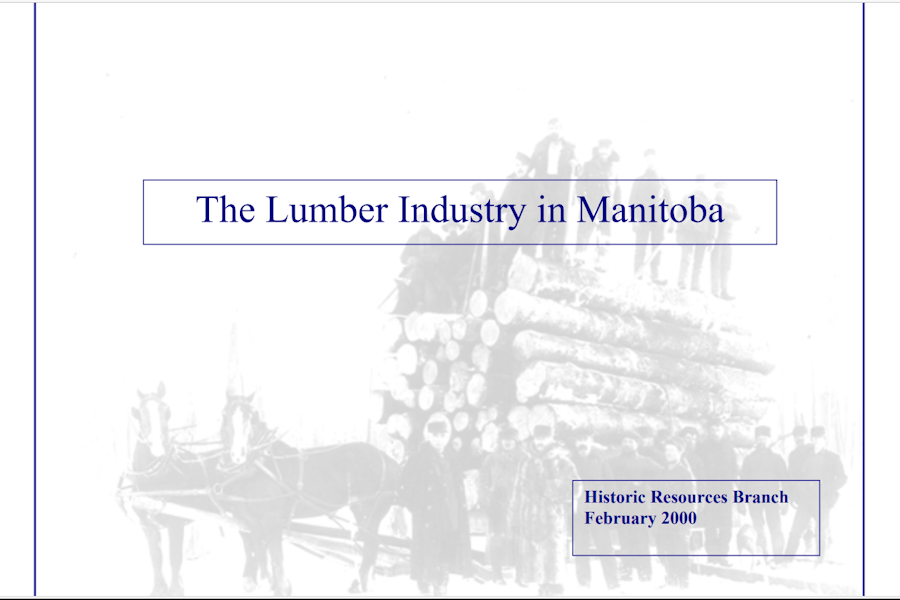
Since the early 1870s, the lumber industry has been an essential component of Manitoba’s economic development. The province’s forests, though lacking the substance of a British Columbia stand of Douglas Fir, have nonetheless proved adequate for the needs of the pioneers who used the available timber to fashion homes, furniture, railways, and structures as huge as the grain elevators which once stood in rows at every railway station. In 1900, there were 33 sawmills operating in Manitoba.
Until 1906, however, the majority of lumber milled in Manitoba still came from the forests of northern Minnesota, sent through the lakes and rivers of southern Manitoba to mills in Winnipeg. In 1906 the majority of lumber sold in Manitoba was milled from logs cut in the Rat Portage (Kenora) area.
Thereafter, the forests of Manitoba began to be harvested to supply the needs of developing prairie towns, but more importantly to be shipped to the United States, where insufficient quantities of spruce lumber were produced to satisfy the American market. Big American firms began to move into the Parkland region to produce lumber for export. After 1921, the American government, under pressure from American lumber manufacturers, began to raise the tariffs on Canadian lumber products. In 1930 the Smoot-Hawley bill was passed, setting a duty on Canadian timber of three dollars per thousand board feet * and then a surcharge of one dollar more. This resulted in a decline in Manitoba’s logging operations.